Transit Opponents Sue To Stop East Link

East Link, c/o Sound Transit

A laundry list of transit opponents have come together in a last-ditch attempt to stop East Link from being built on I-90. We’ve recently gotten word that a suit has been filed against the State over the use of the I-90 express lanes.

The petitioner list is almost entirely expected: Kemper Freeman, Jim Horn, Steve Stivala, Ken Collins, Michael Dunmire, Sarah Rinlaub, Al Deatley, Jim Coles, Brian Boehm, and the Eastside Transportation Association. Some of these people are also involved in the conservative Washington Policy Center, another transit opponent.

Their argument is simple: They claim that if the I-90 express lanes were paid for with gas tax money, they can’t be used for transit.

Unfortunately for them, there’s plenty of precedent for state highway right of way being used for transit (consider Link as it follows 599, 5, and 518). The independent analysis we discussed yesterday demonstrates that the discussion has moved far past opponents’ claims – I-90 was built for transit, and if the state used gas tax funds to pay for a transit facility, the analysis framed that as more likely their problem than Sound Transit’s. Some money may change hands, but the process for doing this is already in place.

What concerns me about this suit is that it could be used by certain state legislators as a reason to delay. “Let’s see how the lawsuit plays out” seems like an easy way to avoid doing their jobs. Fortunately, the valuation is on track, and I don’t think any particular legislators want to be called out for blocking progress when there’s a hard deadline in state law for the agreement being complete.

We’ll update soon with the text of the suit.

Bus Displacement

Photo by the Author
Photo by the Author

Nina Shapiro at the Daily Seattle Weekly makes the first journalistic attempt to figure out how Rainier Valley-Downtown Seattle bus service is competing with Link, and throws in a racial angle.  She also makes a fairly big factual error.

First the error:

One possible railway deterrent: It’s not free to transfer from train to bus, as it is from bus to bus.

This is simply not true.  From Metro’s website:

A valid transfer from Community Transit, Pierce Transit, or Sound Transit can be used as payment for a one zone fare on Metro Transit, regardless of how much you paid on the other system.

Going from the Rainier Valley to elsewhere in the city, as in the example this draws from, is a one zone fare and therefore a free transfer.  This took approximately 20 seconds for me to look up, and it’s a shame Ms. Shapiro didn’t bother to do the same.

Another point worth making is that attracting new transit riders is a good thing, and illustrates the “rail bias” that helps make rail transit’s long-term cost per rider more competitive than buses for high-ridership routes.

Finally, a lot of the minority population in the Rainier Valley is also an immigrant population, with limited English skills.  For many of them, it was labor-intensive to figure out how to get around in the first place, and it’ll take a bit more of a nudge for them to try out a new mode that may get them places faster.  After all, I’m both a fluent English speaker and a transit wonk, and I don’t pretend to fully understand all the intricacies of our interlocking fare systems.  Beyond that, there’s a ton of misinformation out there, as the Weekly piece shows, partly due to Sound Transit’s last-minute convergence on its fare policies.

That “nudge” will occur in September, when the 42 and 42X effectively cease to operate.

News Roundup

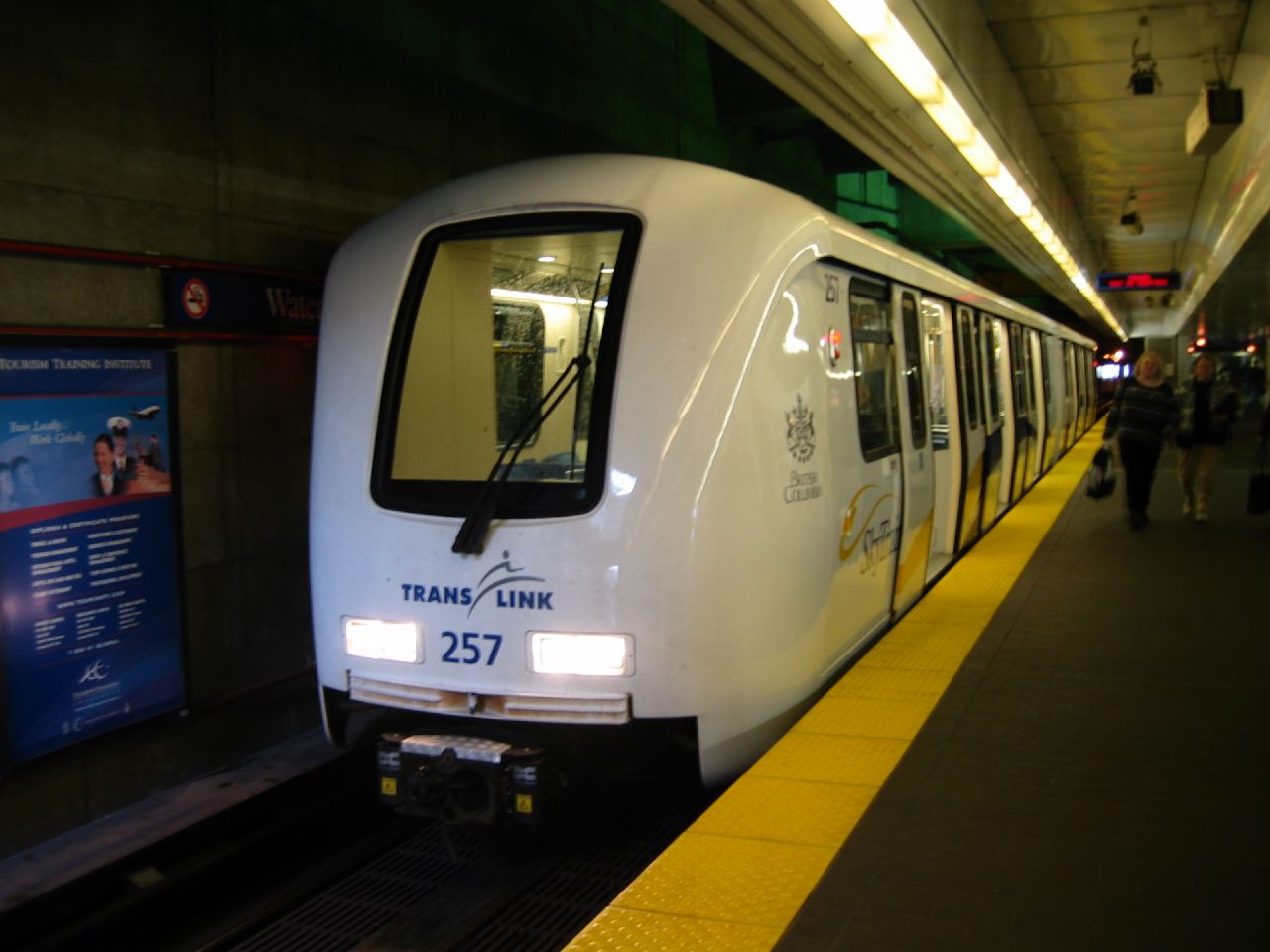
Vancouver Skytrain (Wikimedia Commons)

ORCA for the kids: good luck

This post originally appeared on Orphan Road.

Seattlest beat me to this, but in summary: you can’t order children ORCA cards online, you have to bring their birth certificate to one of two locations downtown during business hours on the weekday. Score one for bureaucracy.

Ride Link to the Seafair Hydroplane Races!

Thinking of heading down to the Seafair Hydro races? Take Link! A free shuttle (with standard Link fare) will be running Friday, Saturday, and Sunday between Othello Station and Stan Sayres Memorial Park. More information is available on the Seafair website, which also mentions that the park isn’t too far from Columbia City Station.

It’s going to be a hot weekend, but we’ve heard the air conditioning on the trains is wonderful!

First Link Ridership Numbers

Link train at Tukwila platform, by l0st2
"Link train at Tukwila platform", by l0st2

[Update 1:09pm. Correction and further points below, in italics.]

Earlier, Ben took the position that it’s best not to get too worked up about ridership numbers at this stage, and I think that’s true whether the numbers are good or bad.

That said, Link’s first-week weekday boardings were just announced via press release as 12,000/day.  For reference, that’s slightly higher than the ridership of the 7 — Metro’s busiest bus route in the Rainier Valley and third-busiest overall, and one that serves a denser population.  Link would be second overall, slightly behind the 48.*   Of course Link has much higher capacity — vehicles are more frequent, much larger, and provide a longer span of service — so any individual train is likely to appear quite sparse at that ridership rate.**

There were 16,900 boardings on Saturday the 25th, and 16,100 on Sunday the 26th.  This was no doubt boosted by the many events last weekend, as well as first-timers who skipped out on opening weekend for one reason or another.

Sound Transit projects 21,000 daily boardings by the end of the year, as people figure out their commutes, bus service is realigned to better support Link, school starts, and some duplicate bus service is cut.  The 2010 figure (once Airport Link is open and the second round of bus changes happens) is 26,600.

There were 1,300 boardings on the airport shuttle bus per day, so about 10% of trips are airport trips.

And before you ask, boarding estimates are based on sensors that perform sample counts of people getting on the train, not on ticket sales and ORCA taps.

* Comparison is skewed somewhat by a lack of Link numbers for when school is in session.

** There are about 248 one-way trips per day, so the mean trip would carry just under 50 passengers, meaning about 1/3 of the seats were full on a 2-car train.

The I-90 Fight Continues, And The State Is Losing

Forward Thrust 1990 Travel Volumes - from Oran
East Link hasn't changed much since Forward Thrust... (from Oran)

To recap: Approved and funded by last year’s Proposition 1, part of the East Link expansion to Bellevue and Overlake will replace the current I-90 express lanes. Those express lanes were built after a 1976 Memorandum of Agreement signed by several parties, including the state of Washington, to reserve them for transit. They would be used for car traffic until a transit agency needed them.

In an amendment to the agreement in 2004, two things were added: one, the R8A project to build HOV lanes on the I-90 bridge outer roadways (from Seattle to Bellevue) was identified as a prerequisite for handing off the express lanes. Two, use of the lanes would be for light rail, assuming Sound Transit could get voter approval to fund the project (and as we know, they did). The state also signed this agreement (same link as previous). At that time, the state DOT was considered responsible for building these HOV lanes, as the prerequisite was never something required in the 1976 agreement — the capacity added by the express lanes was intended to be temporary.

During the last legislative session, the state essentially reneged on the HOV project, opting to fund huge highway expansions and strip most funding for R8A, failing to fund the paltry $24 million they committed to during Sound Transit 2 negotiations, in which Sound Transit agreed to fund an additional $90 million (PDF). In addition, Speaker Frank Chopp started making comments about Sound Transit paying $1 billion or more for use of the lanes. Given the growing number of concessions Sound Transit made (see that PDF above) to get use of a facility built for transit in the first place, this was outlandish and, in this blogger’s view, highly irresponsible.

After considerable wrangling, the House replaced $10 million of the $24 million, allowing design work to continue, and an agreement was reached to use a third party to determine the valuation of the lanes and how much, if anything, Sound Transit would have to pay the state for their use.

Here’s the new stuff: Last week, the independent consultant agreed to earlier in the year released their draft report, “An Analysis of Methodologies to Value the Reversible (Center) Lanes on Interstate 90…” (PDF). It has some interesting things to say, especially as the legislature’s Joint Transportation Committee will be meeting tomorrow in Seattle to discuss this. Several fantastic points from the report after the jump:

Continue reading “The I-90 Fight Continues, And The State Is Losing”

Brush Fire in Tukwila

traffic

[Update 4:38pm: P-I reports some more lanes are open, but traffic still looks ugly.  Apparently, this was all caused by a moron tossing a cigarette into a bone-dry median.]

Brian Bundridge, out at Tukwila station, has several items to report:

“due to the brush fire in Des Moines, buses are being rerouted to Hwy 99/Pacific Hwy”

“I-5 and Hwy 99 are complete gridlock”

“Parking at Tukwila station is COMPLETELY FULL. And there are 4 TVM’s”

“I’ve already been hearing that street parking several blocks away is stuffed, too.”

“and businesses have been towing people”

“I just got on board Link (got lucky to see someone pulling out) and it is almost standing…”

Nothing on any agency websites about the reroute.

If this persists, I’d take Sounder to go South.