As Oran points out, each of those little dots is a rail station.
64 comments
As Oran points out, each of those little dots is a rail station.
64 commentsTo expand on yesterday’s post by delving into the Sound Transit Executive Committee presentation on the revenue shortfall, some important details emerge:
 The July 2008 projections were the ones used in creating the Sound Transit 2 plans. The change in the August 2009 and August 2010 projections from 2008, in absolute and relative terms, are on the right.
Since each subarea essentially pays for its projects out of its own account, the breakdown by subarea is important:
The presentation also breaks out how ST absorbed last year’s $3.1 billion drop: $2.1 billion came from project reserves and from lower construction bids; $900m in lower inflation and financial contingencies; and a $90m cut in administrative expenses.
There will be a new financial plan in September, which the Board will discuss through the end of the year.
141 comments
Revenue forecasts have fallen further from the original projections for Sound Transit 2. The latest estimates extend the shortfall from $3.1 billion over the life of the project to $3.9 billion, out of a $18 billion total program cost.
In the past, the extensive reserves built into project planning had shielded ST from the need to making fundamental changes to the plan. According to ST spokesman Bruce Gray, that may be no longer be the case:
This fall the Board will develop short- and long-term spending priorities during the normal budgeting process from September – November. Options to address the revenue shortfalls may include reducing project scope, extending project timelines and reducing operating and administrative costs.
“Administrative costs” is often interpreted as pure waste, but this is the kind of thing that improves incident planning and makes decent use of variable message boards, so it’s not a free lunch for transit users.
Project-wise, Lindblom notes the threat to non-core projects such as the early S. 200th Street extension, the Aloha streetcar extension, and the tunnel option through Downtown Bellevue.
51 comments
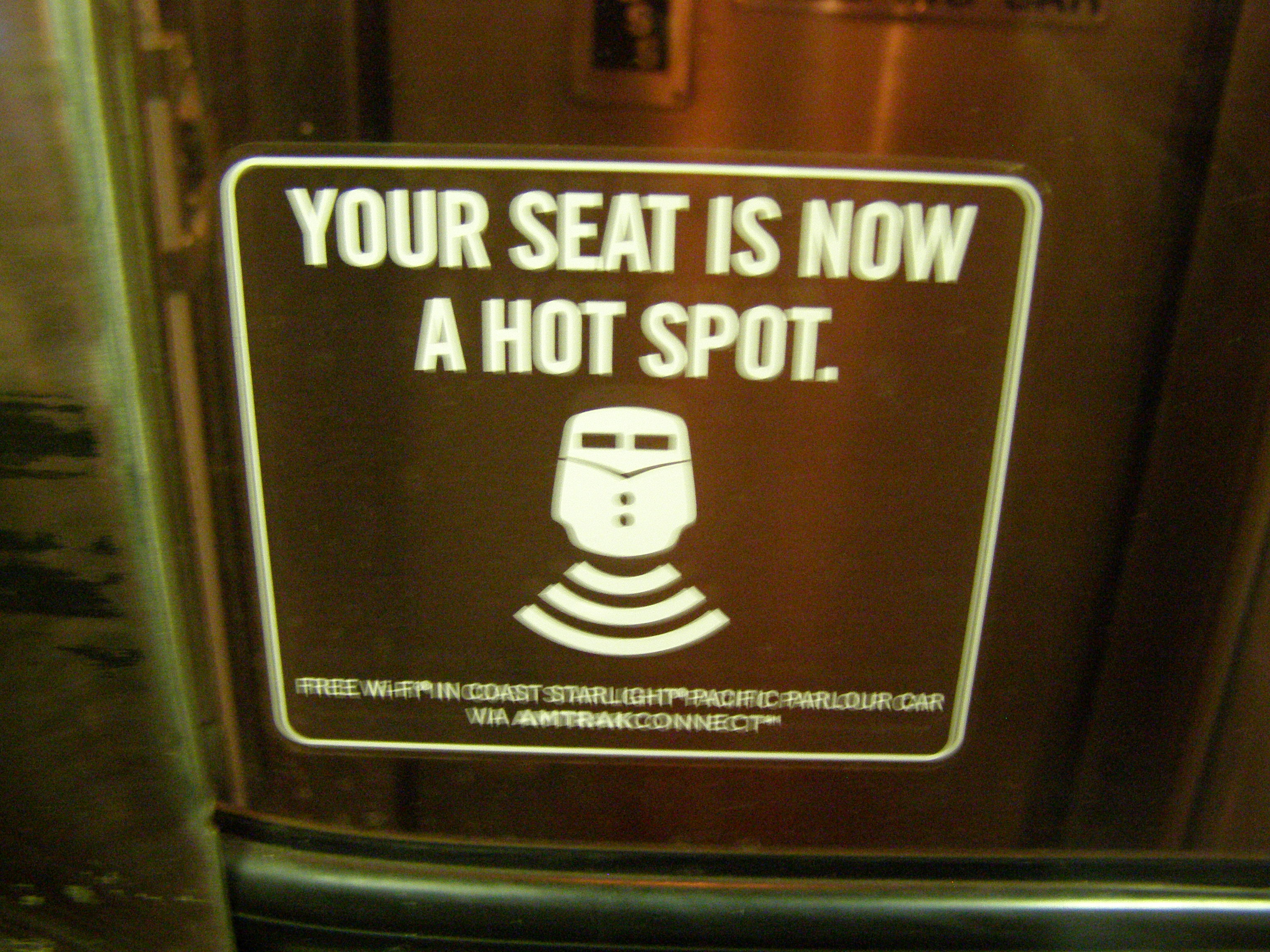
Two weeks ago I traveled from Seattle to Los Angeles aboard the Coast Starlight. Since the dark ages of 2005-2006, during which the train was late 90+% of the time, the Starlight has done much to reclaim its status as a premier passenger train. After a mudslide knocked out service in the winter of 2008, Amtrak ‘relaunched’ the service with a renewed focus on amenities and on-time performance, and it has worked. In June 100% of southbound trains arrived into Los Angeles on-time, while 93% of northbound trains into Seattle arrived on-time. My own trip confirmed this improvement. For $220 I had an on-time arrival, wireless internet, bottomless coffee and fresh produce, simple but decent meals, tablecloth service with porcelain dinnerware and real flatware, a small but comfortable room, a hot shower, leather lounge chairs, a cinema, and a panoramic view of Mount Rainier, the Tacoma Narrows, the Nisqually River Delta, the Columbia River, the Willamette Valley, the Oregon Cascades, Mt. Shasta, the Sacramento/San Joaquin Delta, and the Central Coast of California.

Though we often discuss how well-developed passenger trains can take modal share away from car and air travel – and Cascades has a good chance of evenly splitting the air-rail market over the coming years – long-distance trains are qualitatively different. They offer neither the on-off freedom of cars nor the speed of airplanes. They are often the only high-capacity transit service available across a large swath of rural America and they traverse scenic pre-Interstate corridors. Being a functionally unique service, long-distance trains compete only against themselves and their own expectations, and they will live and die on the strength of the experience they offer. Amtrak seems to have belatedly figured this out, and the Starlight is again a wonderful experience. It’s not the ‘Star-late’ anymore.
As a footnote, I think Seattle and Portland have largely not recognized that we have arguably the highest quality Amtrak service in the country. We’re not a hub like Chicago, nor do we have the frequency of the Northeast or California, but we have the two best long-distance trains and a unique corridor service with Talgo equipment everyone else would love to have. While in many ways Seattle is behind the curve, we can at least be grateful for the high quality of service we enjoy.
119 commentsThis post originally appeared on Orphan Road.
Well, duh. But it’s nice to see a map that corrolates so well with the theory. From SDOT:

The green areas have the least GHG emissions from driving per household. The outlined areas are our urban villages.
1 comments
On the heels of Whatcom Transit Authority losing in their attempt (by 1.8%) to increase the sales tax and maintain service levels, the City of Bellingham is looking to step in and save bus service in the city itself:
Leaders of the newly formed citywide transportation district wants to ask voters for a sales tax increase this fall, instead of imposing a $20-per-year car tab fee, which could be done without voter approval…
An official decision to put the issue before city voters in November will be made Monday, Aug. 9.
The city would spend the roughly $3.8 million generated by the sales tax increase for annual street repaving, installing sidewalks and pedestrian crossings, and contracting with Whatcom Transportation Authority to replace bus service that’ll be cut this fall.
The license fee would have only added about $800,000 annually, so the sales tax option brings more revenue.
Voting in November, when turnout increases, and limiting the vote to the more pro-transit city itself seem like big winners to me. Those of you who live in Bellingham or know someone who does are encouraged to contact the City Council to support the vote, and then start registering young people.
12 comments
Sound Transit finally began using the variable message signs (VMS) at SeaTac/Airport Station to tell passengers which train is next to depart for Downtown Seattle. The message, “THIS TRAIN TO SEATTLE”, is put up on the signs next to the train to depart. The other set of signs continue to say “Welcome to SeaTac Airport”. There was one case when they were wrong. Signs were pointing to a train going out of service and returning to the yard. Another train arrived shortly and when the out-of-service train left the station the signs switched to the correct train. That suggests the signs are operated automatically though I do not know for sure.
This is a good development in informing passengers and hopefully leads to some kind of next train countdown display, which we all are hoping for without any indication it’s going to happen. Past solutions that Sound Transit used include sandwich board signs and manually switched lighted signs at Tukwila International Boulevard Station before Airport Link opened.
47 commentsA quick reminder that the Transportation Choices Coalition fundraiser we mentioned earlier this week is happening tomorrow. What’s TCC?
For those of you who don’t know, TCC is a nonprofit that shares this blog’s values. Unlike STB, they do the things that really require full-time employees: lobbying Olympia and providing a pro-rail, pro-transit, pro-density voice on various government commissions and task forces.
I’ll be there, along with a few other bloggers.
Update: We just got word that Congressman Jay Inslee and King County Executive Dow Constantine will be in attendance. Inslee is rumored to run for governor in 2012, so it’ll be interesting to hear his thoughts on public transit.
0 comments
This is an open thread.
100 comments
Last month, the South Lake Union Streetcar had record ridership, finally breaking the 2,000 mark with a weekday average of 2,193 boardings and a weekend/holiday average of 1,459. This is about a 15% increase over June’s weekday ridership, and a 9% increase in daily ridership over the same period last year. Weekend/holiday boardings were actually lower this year, likely due to the construction at Lake Union Park, which limited the number of fireworks viewers in the areas. You can view the full day-to-day breakdown here.
One observation to point out here is that historically, July tends to be the peak of streetcar ridership with summer tourists flocking into town. While the numbers have followed a curve in years past, Amazon’s continued move into the area may help buck that trend– two phases of the campus have now been completed with three more to go.
H/T: Michael Arnold
29 comments