Light rail tracks running toward Northgate Transit Center (Lizz Giordano)
Metro usually gathers a citizen sounding board when it’s planning a major service change. It’s a way to gather impressions after detailed technical discussion instead of drive-by comments.
They’re currently collecting applicants for the service change associated with Lynnwood Link. If you’re willing to approach it with an open mind, think about the community as a whole instead of your own needs, and commit the necessary time, it can be a rewarding experience and do some good for the region. Please consider it!
In the week between Christmas and New Year, King County Metro activated its emergency snow network (ESN) for only the second time. However, it felt different this time around. In 2019, the situation was widely understood to be an emergency (even prompting Governor Inslee to declare a state of emergency, limiting the hours vehicles could be driven).
This time, there was definitely snow, but it didn’t feel like… an emergency. While there was enough snow to make driving inadvisable, there seemingly wasn’t enough to justify drastic action. Even more confusingly, Metro kept the ESN in effect even when conditions were improving. By the last day of the ESN on January 1, 2022, the snow had cleared enough that many areas of King County had roads clear of snow and ice, and neighboring Pierce Transit was operating with 75% of its routes on regular (non-snow) routes. Even in its blog post about its continuation of the ESN into the new year, Metro points to “ongoing freezing temperatures and difficult road conditions in parts of King County” (emphasis mine). In any other time, difficult road conditions in just parts of the county would result in service in those parts of the county operating on snow routes, not keeping the entire county in the emergency snow network. So, what was different this time, and what can be done about it?
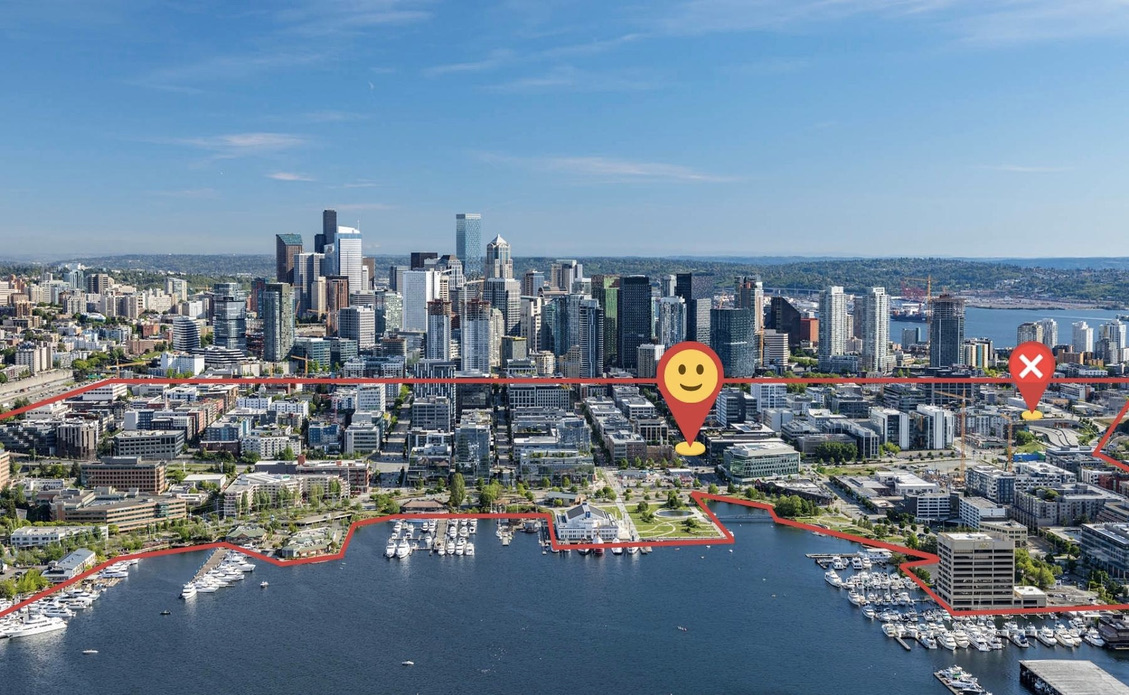
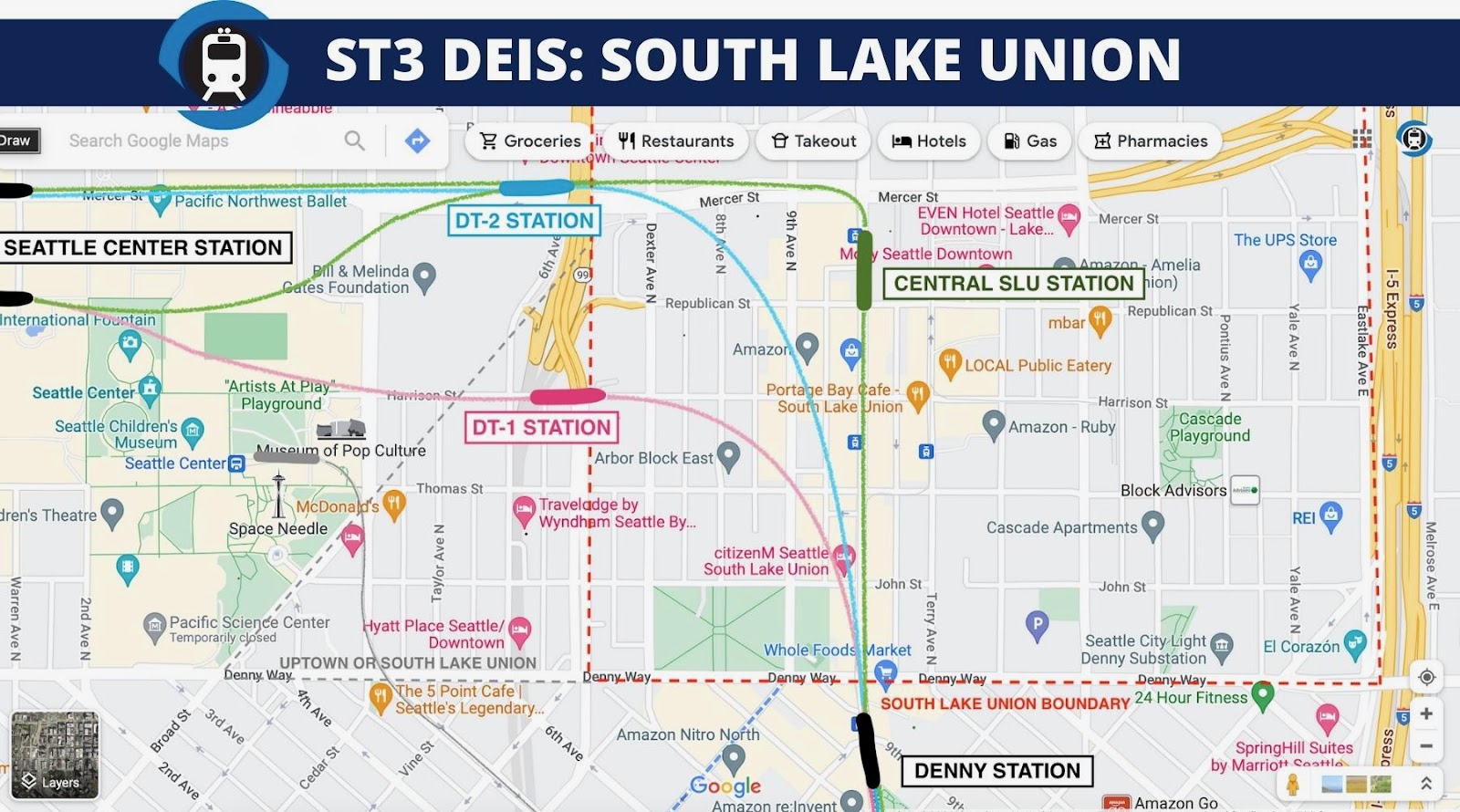
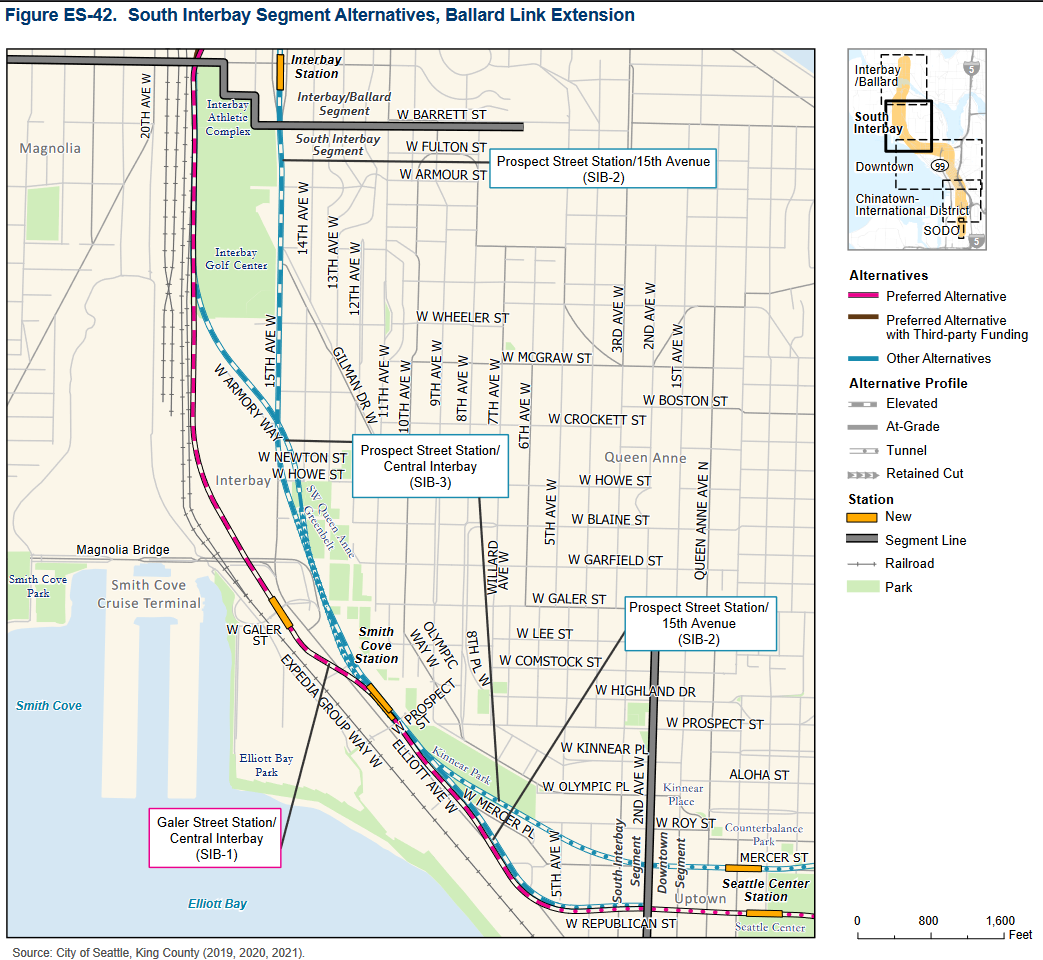
Last week Sound Transit released the Draft Environmental Impact Statement (DEIS) for the West Seattle/Ballard Link Extension (WSBLE), the long-awaited Link line from Alaska Junction to 15th and Market, via Sodo, Downtown, South Lake Union, Uptown, and 15th. The comment period began today. View the online open house and comment here.
Really Deep Stations
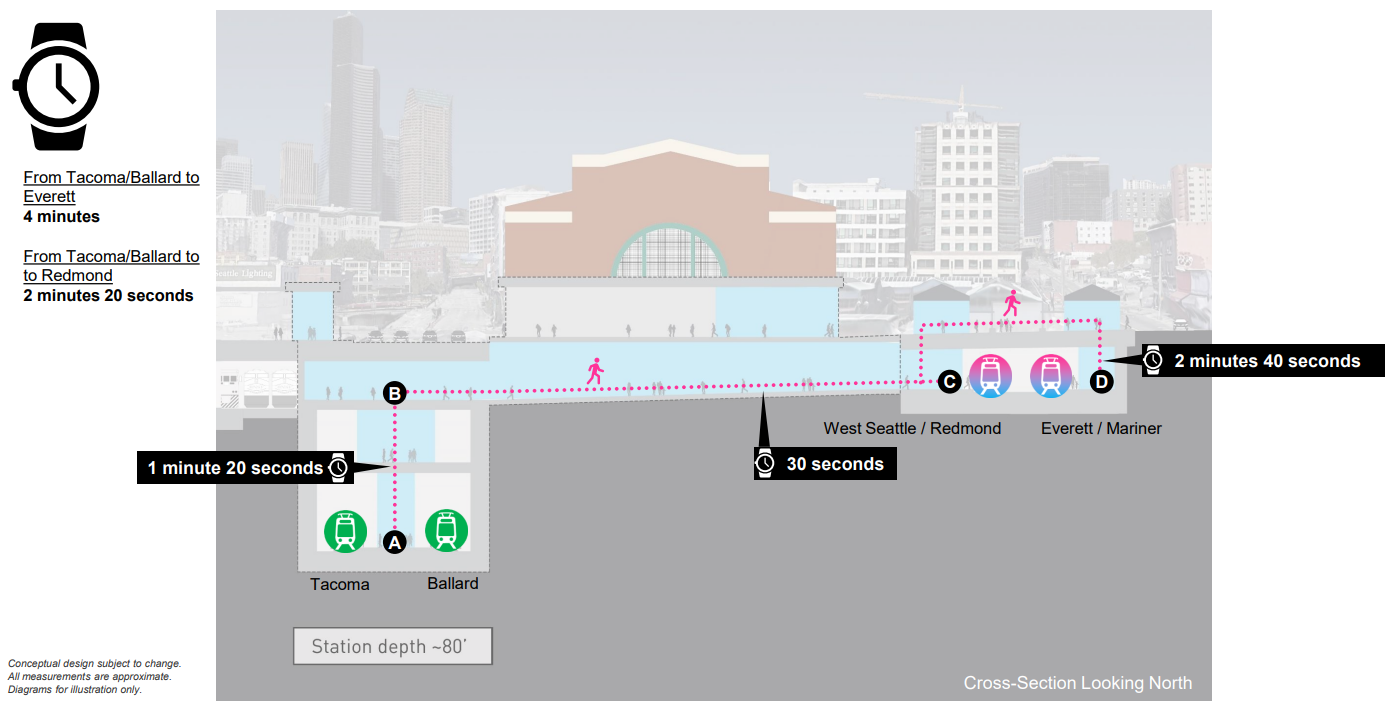
Both Doug Trumm and Mike Lindblom ($) have already explained the very deep stations proposed along underground segments downtown quite thoroughly. But briefly: typically, the deepest stations in a system are among the lower-ridership ones (like Washington Park in Portland). Westlake, Midtown, and Chinatown would be among the deepest in North America but also among the busiest in the system. Stations this deep mostly depend on elevators, which limit throughput, have an (ahem) spotty maintenance record, and increase the length of every trip that uses the station.
Worse, there is no engineering reason for Chinatown to be deep. It’s a potential concession to a neighborhood that is tired of decades of disruptive construction projects nearby. There is also no appetite to cheaply and shallowly cut-and-cover 5th Avenue downtown for similar reasons. Hopefully, early media attention will help politicians stand up for future riders, and engineers to get a little more creative.
The bus routes that are north of Seattle will change after Lynnwood Link. Several routes cross the county line, or should. These are operated by King County (Metro Transit) or Snohomish County (Community Transit). What follows is a proposal for changes to these routes. This is not meant to be a comprehensive list of bus routes that go across the border, but a few that would change because of Lynnwood Link.
About the Map
You can see a full size map by clicking in the corner. You can highlight a route by selecting it on the legend or the map itself. I’ve tried to be as detailed as possible on the map, although errors are inevitable (please notify me of mistakes via the comments).
As Sound Transit has done several times before, it is shutting down the 1 Line between SODO Station and Capitol Hill Station this weekend, for maintenance work.
A free bus bridge will run from SODO Station To Capitol Hill Station, serving temporary stops at the stations in between. However, this time, the bus bridge will run only every 15 minutes.
Seattle’s new Mayor does not seem to be a fertile source of pro-housing legislation, having campaigned on skepticism about changing single family zones. But instead of struggling for dimes, we can pick up dollar bills at the state level. The bills are SB 5670 and HB 1782, and as explained by local treasure Dan Bertolet, would legalize:
Up to sixplexes on all residential lots within a half-mile of a major transit stop in cities with populations of 20,000 or more.
Up to fourplexes on all residential lots elsewhere in cities of 20,000 or more.
Duplexes on all residential lots in cities with populations of at least 10,000.
There are also substantial limits on parking minima, and some anti-displacement measures. Cities could skip these prescriptions and instead adopt city-wide density minima, but they would have to show this did not have disparate impacts — no putting all the growth in the “urban renewal” sectors and leaving the upscale places untouched.
Senate Bill 5528’s local option will provide significant benefits for regional and citywide rapid transit expansion.
The 2022 legislative session is starting off with a bang this week. Before the first week is done Senate Bill 5528 will have a hearing in the transportation committee. The bill picks up where last year’s HB 1304 left off but expands the function to a regional level under the governance of Sound Transit. A city, subarea, county, or combination thereof will have the option to create an “Enhanced Service Zone” to target the investments their voters care about most
SB 5528 allows the Sound Transit Board to give voters the opportunity to fund faster construction timelines on existing projects and/or fund new transit improvements and services for individual cities and sub-areas within the Sound Transit district.
What is possible is only limited by what the individual cities and their voters want. Some sample potential projects and Enhanced Service Zones: