Car vs. Link

Photo courtesy of Greg Briggs

On September 15 at about 2:20pm, a car made an illegal left turn in front of a Link train, causing a 40 minute service disruption in the Northbound direction.

There was minor damage to the car, but thankfully, no injuries.

Seattle Police cited the auto driver for the illegal turn.  Train and car both left under their own power when the police were done.

I’m glad to see that the local media was relatively restrained in their reporting.  Unlike the frenzy surrounding the first few collisions, this one seems to have been treated like any other traffic accident.

As a preemptive move, I’ll link to my previous comments on the safety of running Link down the center of MLK.

Audit of Metro Trolley Bus Audit

This post originally appeared on Orphan Road.

When an audit was released that listed Seattle’s electric trolley buses (ETB’s) as more expensive per year than a hybrid bus replacement, I was amazed. Although the benefits of ETB’s are many, I’ve considered cost efficiency a large benefit. As the report did not list sources for its data, I took the next step of asking the auditor to view the source data. I was e-mailed two spreadsheets with almost all of the information I wanted.

Observations from the audit:

1. The main source of the cost difference is that the ETB’s are claimed to cost twice that of hybrid buses. I can imagine this if they bought just one, since it’s not an off-the-shelf product. But they’d be buying close to 200 – there has to be economies of scale there, and the components of an ETB have to be cheaper than a hybrid.

2. Hybrid fuel efficiency was listed at 5 mpg. This is in direct conflict with Metro statements in the past of observing 3.8 mpg.

3. “Engine overhaul” is listed at 6.7x as frequent for ETB’s vs. hybrids. This just can’t be right, as ETB’s don’t have engines. If they’re talking about the electric motors, these last a long time and shouldn’t cost the same as a engine overhaul.

4. Overall, operating costs are much cheaper for ETBs than diesels or hybrids. It’s really the initial cost of the buses that seems to drive up the price.

I am following up with a list of questions to the auditor, and will report back when I get a response.

[update] The new bus costs and “engine overhaul” data came from Metro. It’s almost as if Metro is trying to kill ETBs (tries to feign shock).

The scheduling spreadsheet also came in. It’s too dense of calculations for me to follow (without a paycheck for such things, that is).

Layover/service ratios appear to be much higher in trolley buses. The auditor’s explanation for this is that they can’t pass each other and they lack flexibility. But flexibility doesn’t mean that they can’t change routes (though this would help in case of an accident), but that they can’t pull double service for two routes.

My comments regarding flexibility:

1. Anecdotally, the reason passing is a large issue is wheelchair loading. The trolleys don’t have a kneeling ability, which can make a wheelchair stop take a long time. Combine a few such stops and you get a line of trolleys waiting for the one in front. If this is costing so much money, wouldn’t the obvious solution is to design in a kneeling ability into the next batch of trolleys?

2. If there would really be an efficiency gained by adding more routes together, couldn’t we just add more wire to create these routes? Why tear out a system that could in all other ways be much more efficient than hybrids? Go all the way and make as many routes electric as you’d need to remove routing inefficiencies. [/update]

Mount Baker Transit Center’s First Day

Route 8 at Mount Baker TC

The Mount Baker Transit Center opened Saturday along with the Southwest Seattle service revisions. The transit center is very plain with standard shelters. New-style bus stop signs that list routes, their destinations, and the bus stop number (handy for One Bus Away users) have been installed. The new style signs can also be found near Othello and Rainier Beach Stations.

At the transit center, Metro service planner Jack Latteman was part of the street team out helping riders figure out the service change. A few people were confused but most seemed to know which route to transfer to. One old lady asked for the 42 which no longer runs weekends.

Many people are still taking the 7 instead of Link. Latteman explained that many people were afraid to try Link or didn’t know how. Frequently asked Link questions were fare related. Many weren’t sure how reduced fares worked or whether their bus pass was accepted on Link. While there are signs that direct riders to the Link station, there’s no information at the transit center about Link itself. A suggestion would be to install a Link information kiosk similar to those at stations at the transit center.

Latteman answered a question that was raised on this blog as to why the transit center isn’t a timepoint for Route 8. It actually is, at least internally for drivers. He said that was a mistake on part of the timetable production group and it’ll definitely be fixed by the next service change in February. A few other mistakes are the map for the 8 doesn’t show the route directly serving the transit center, the timetable doesn’t indicate which bay the 8 serves, and a timetable symbol reference to a 5-minute layover at the transit center that appears nowhere on the timetable itself. All of these mistakes have been noted for correction.

Route 8 and 48 are scheduled for easy connections at the transit center. The timed connections can be viewed in this Metro document (PDF).

First Hill Streetcar Funding Agreement Coming

First Hill Streetcar Map
First Hill streetcar alignment options, by Oran.

Central District News reports that the Seattle Department of Transportation is nearing a funding agreement with Sound Transit on the First Hill streetcar, which would connect the Capitol Hill light rail station with the International District station through First Hill and edges of the Central District.

Voters approved Sound Transit funding the streetcar line last November. At the time, the city agreed to handle construction at a cost lower than Sound Transit expected to reach independently. The city also agreed to be on the hook for any cost over-runs. Sound Transit would give the city $132,780,000, according to the report.

Initially planned to be built by 2016, the city is attempting to accelerate construction of its second streetcar line. Having a funding agreement in place is the first step toward delivering the streetcar years ahead of schedule. It now looks likely to see a 2013 delivery date for the streetcar, as early missed milestones may have put a planned 2012 date in the territory of too optimistic.

The exact routing of the line is still to be determined, with some groups arguing for an alignment on 12th ave near Seattle University to serve the Central District and an active street while others favor serving the hospitals by remaining on Broadway (see earlier coverage). The funding would cover these planning stages.

Mayoral candidate Mike McGinn has committed to completing this streetcar, as it is voter approved and already funded. His opponent, Joe Mallahan, is decidedly more lukewarm on the project. He told the Seattle Times that he would study and maybe even oppose the streetcar but has been vague on his exact stance since that remark. His new standard seems to be that a cost over-run of perhaps even a single dollar would justify canceling the project. McGinn, on the other hand, caused a stir in the transit community last week by promising to hold a vote for in-city light rail expansion in two years time.

Regional Transit Committee: Cuts, Not Suspensions

The balls in their court
The ball's in their court

[UPDATE 8:22 PM: Arrgh!  Reading Comprehension!  In my haste to get this out, I misread Erica’s post.  Revisions below in italics.]

Erica C. Barnett reports that King County’s Regional Transit Committee is likely to vote voted to recommend that service reductions be treated as cuts rather than suspensions.  Unfortunately, minutes and video of Wednesday’s meeting are not yet available.

Service reductions will likely be apportioned according to existing service levels, hitting the West subarea (Seattle, Shoreline) the hardest.  As we reported several months ago, if these are considered permanent cuts, service restoration will be in accordance with 40/40/20, meaning that Metro must add back about three times more aggregate service than it cut to achieve the same service level in the West subarea.  That would be a permanent relative shift of resources to the suburbs.

The balance of suburban to Seattle representatives on the RTC is 10 to 2, with Dow Constantine representing both City, suburban, and incorporated precincts.  Constantine has come out in favor of the suspension concept.

The RTC’s vote is merely an advisory to the King County Council, which has a less pronounced Suburban majority.  The expected RTC result would will serve as useful cover for suburban councilmembers seeking to vote the narrow interests of their districts.

On a somewhat related note, Goldy argues that regional governance and agency consolidation aren’t such hot ideas if elected officials aren’t going to consider regionwide interests.

Three Musings on the McGinn Light Rail Plan

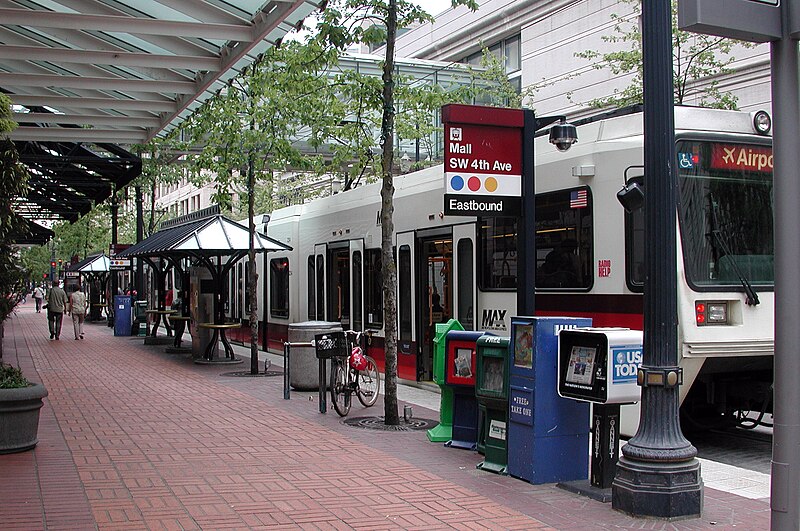
Portland MAX (Wikimedia)

It’s fun to get out ahead of McGinn on this light rail plan, but let’s remember that even if McGinn wins it’s going to get passed off to the eggheads for a couple of years.  For that reason, it’s most important to understand the principles that is going to guide McGinn’s decisionmaking on this, not try to pin him down on a specific alignment.

Anyhow, a few unrelated musings on the plan are after the jump.

Continue reading “Three Musings on the McGinn Light Rail Plan”

News Roundup

KCM RapidRide, CT Swift DE60LFA, by wings777
"KCM RapidRide, CT Swift DE60LFA", by wings777

Things that fell through the cracks while we obsessed over the McGinn light rail speech:

This is an open thread.

Metro Audit Report Complete

Access Service Area
Access Service Area (King County Metro)

On September 15 the King County Auditor completed their report to the  Council on their full audit of Metro operations.   The first part of the presentation was on September 1, and identified up to $23m in annual savings with little downside, about $60m that would cause pain for riders, and a one-time $105m surplus to get us through the recession.

The entire report is now online; passionate trolleybus defenders, which John and I are not, will want to poke holes in Chapter 4 of Report A (pdf).  There’s also a two-page summary of the whole audit if you prefer the Auditor’s writing to mine.

The chart below summarizes the entire audit.  For comparison, Metro’s deficit balloons to $142m in 2013.  It’s also important to recognize that these savings, if implemented, will take time to realize and not necessarily change the picture in 2010.

audit
Click to Enlarge

Scott Gutierrez has an excellent roundup of politician reaction to the audit results.  Details about the last four lines of the  chart at left are after the jump.

The next step is the release of the Executive’s proposed budget on September 27th.  Triplett’s current plan assumed no savings from the audit (aside from the $105m fleet replacement surplus) but required $90m in suspensions over four years.  Furthermore, about $12m annually of the $51m the auditor claims in new fare revenue is built into the Triplett plan.  Aside from that, any audit savings would presumably be able to “buy back” service suspended in the plan.

Continue reading “Metro Audit Report Complete”

The Portland Green Line Example

This post originally appeared on Orphan Road.

Mike McGinn’s plan for Westside light rail is welcome news. Ben @ STB notes that Sound Transit is planning to study this in 2015, so McGinn might try and find the money to push that up a few years.

Great.

But here’s where I start to have a problem with the McGinn proposal:

He mentioned Portland’s newest light-rail segment, the Green Line, which opened last weekend, as a good model. Eight new miles of new corridor were built for $576 million, in the east suburbs and near Portland State University downtown.

The reason why the Green Line was so cheap, as The Transport Politic explains, is that it was built in a highway median that was set aside 30 years ago for transit, much like our I-90 HOV lanes. No such right-of-way exists on the Westside.

The old engineer’s adage is: “Fast, good, or cheap. Pick Two.” McGinn’s promising all three, which should make us all a little suspicious.

Sharrows

This post originally appeared on Orphan Road.

The CD is getting some more sharrows. I live on a street with sharrows, and I don’t see a huge benefit to them. But if they’re at least a big honking sign saying “bicycles exist” then they’re probably worthwhile.

Biking in this (or any) city is tough. So few people bike these days that anything that increases the number of bikers and/or bike safety even a bit has to be seen as a success. Fortunately, like urban renewal, it’s subject to feedback loops. The more people who bike the safer biking becomes, which gets more people biking, etc., etc.