
- ST3 tunnels vs. bridges
- Single-tracking for East Link (18:02)
- California High-Speed Rail (23:54)
- Watering down Mandatory Housing Affordability (33:40)
Getting ready for the all-train tunnel

At a press conference yesterday, Metro, Sound Transit, and SDOT released their initial plans for the post-bus tunnel era. On March 23, Sound Transit will be the sole operator of transit service in the Downtown Seattle Transit Tunnel (DSTT), and will run only Link light rail trains through it.
Metro and Sound Transit buses that ran through the tunnel will now run on surface streets. According to Metro, 830 daily trips will move from the tunnel to the streets. Those trips will still enjoy their own right of way through most of downtown, though the impact to reliability remains to be seen.
Some Metro routes, including workhorses like the 40 and 120, will add additional trips thanks to funds from the Seattle Transportation Benefit District (STBD). We’ll cover the changes to those routes, and a systemwide service restructure, in a later post.
Link riders will experience several major changes. Link will become more reliable and frequent, with consistent, six-minute headways. Seven routes, including Sound Transit’s high-ridership Route 550, will move from the tunnel to the surface.
Head of Metro security charged with rape, human trafficking
On Tuesday, the King County Sheriff’s Office (KCSO) arrested King County Metro’s head of security, Mark L. Norton, on human trafficking and rape charges. Norton has worked for Metro since July 2010.
In charges filed in Snohomish County Superior Court, KCSO Detective Luke Hillman alleged that Norton repeatedly raped a young woman in his employ when she was a minor, then coerced her into prostitution after she turned 18.
“The suspect’s grooming began when he was in his 30’s and the victim was a teenager and was babysitting for the suspect’s children,” KCSO Sergeant Ryan Abbott wrote in a separate, Wednesday release. “After persuading the victim to engage in sex acts with him, the suspect had the victim move in with him. Eventually the suspect operated as a pimp and pressured the victim to engage in prostitution on numerous occasions throughout Seattle, Lynnwood and Everett. The suspect arranged the prostitution online and kept the money brought by people wanting to have sex with the victim.”
According to Metro spokesperson Torie Rynning, Norton has been placed on unpaid leave and may be terminated.
“We are shocked and deeply disturbed to learn of the allegations and are cooperating with investigators,” Rynning wrote in a statement. “While in custody, this employee will be on unpaid leave, and we are exploring avenues to take immediate steps regarding this employee’s ongoing employment. Meanwhile, we are conducting our own administrative investigation to determine if any additional or unrelated code of conduct violations may have occurred.”
We asked Metro whether their background check picked up any prior malfeasance by Norton when he was hired.
“Metro currently conducts extensive background checks for sensitive personnel positions, including this position,” Rynning wrote. “We are reviewing our procedures to determine if additional screens are needed, however it is not clear that this activity would have been caught with additional screening.”
Balducci working on countywide transit funding package

King County Councilmember Claudia Balducci has started work on a potential countywide, dedicated transit funding package to augment or replace the Seattle Transportation Benefit District (STBD.) That tax package, which is comprised of a sales tax increase and car tab fee, is set to expire at the end of 2020.
Balducci says that the funding would be spent on implementing the ambitious Metro Connects program, the long-range plan that the agency and Council released in 2017.
“There’s a lot of stuff in Metro Connects that a lot of communities want, that will help with their transportation needs and their economic development and growth plans,” Balducci says. “But we haven’t identified the funding to serve all of that yet.”
Continue reading “Balducci working on countywide transit funding package” | 22 commentsAffordable Housing Legislation Nearing the Home Stretch
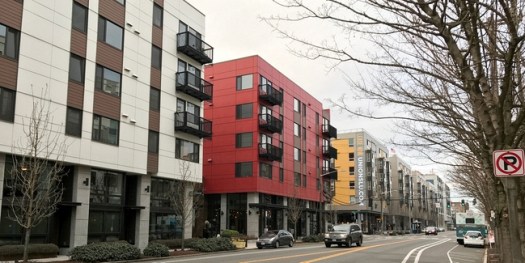
The long-studied Mandatory Housing Affordability (MHA) is moving to the top of the Seattle City Council’s agenda. MHA requires new multifamily construction to pay include on-site affordable housing or pay into a housing fund. (Single-family construction is exempt, because reasons.)
Former Mosqueda staffer Mike Maddux had a great analysis of each of the amendments and how each of the council members approached the task differently when it came to their particular district:
So here we are with a series of amendments, most of which would limit the ability of MHA specifically, and affordable home development broadly, to be successful, but in different ways. I’ve broken these out into the District 1 amendments, the District 6 amendments, the Historic District carve-outs, and some miscellaneous amendments. Of note: District 3 managed to get away with no amendments for limiting growth, and District 7 no amendments at all. Essentially these two areas are taking growth (and happen to be the most expensive areas to build).
Kevin Schofield has a solid rundown of the political battle lines:
In each case, the Council member representing that district went to bat for the reduction: Herbold for West Seattle Junction and Morgan Junction, Harrell for Beacon Hill, Johnson for Roosevelt and Wallingford, and O’Brien for Crown Hill. But on the flip side, the two city-wide Council members, Mosqueda and Gonzalez, held firm in their desire to maximize the upzones wherever possible and resist reductions. Council member Juarez joined them in the resistance; Baghsaw was conspicuously silent on the matter, and Sawant was absent from the meeting.
Both are worth reading if you want to understand where things stand. With Bagshaw and nominally pro-density Sawant as the swing votes, it’s possible all these amendments get voted down next week.
It’s not the most novel piece of analysis to add that MHA is both necessary and insufficient. It’s hugely regrettable that Mayor Murray dropped single-family zones so early on. It’s puzzling that three lame-duck council members are being so hostile to zoning changes. Furthermore, it’s terrible policy that the EIS is a one-way ratchet: in the bizarro world of our state environmental policy, up-zoning causes impacts but downzoning causes none.
There will be a public hearing this Thursday at 5:30pm at City Hall with a vote likely for Monday the 25th. You can also contact the council and let them know your thoughts.
10 commentsST3 Level 3 Planning: Lets Not Paint Ourselves into a Corner
We’re finally here: ST3 Planning level 3 is where we cut everything but two options and send those on for an environmental impact study. Those options will include a high end options that relies on local funding an an affordable option that doesn’t. At this point, our primary concern is with the low end options. There is a conversation to be had in the future about whether spending $1.9B on high end ST3 options makes sense and where the money will come from, but that’s a topic for another day.
Right now we need to make sure the affordable options that we send through are acceptable in case additional local funding never comes. Building on our central concepts of Reliability, Expandability, and Accessibility along with our Level 2 feedback and plea to put riders first, here is what we’re focused on now by station:
Ballard
Though we’ve heard ST staff say many times that the options are mix and match, we don’t get the impression they mean it when it comes to the Ballard station location. As we (and others) have said many times a 14th NW station and a drawbridge are both unacceptable. A drawbridge is an unacceptable reliability compromise for the future or our system. A station on 14th NW simply doesn’t serve riders west of 15th or transfers well. A station on 15th NW with entrances on both sides of the street does.
A 14th high bridge crossing with a station on 15th is our minimal expectation for an affordable option. While it’s not impossible to see local funding via the port come through for a tunnel to Ballard, as the current options stand, the 15th Ave NW tunnel station the only option we can support.

More Bus Cancellations, Fewer Bus Lanes, Because Presidents’ Day


Just when you thought it was safe to depend on apps that use the regular schedule to tell you when your bus is scheduled to come, a holiday that many don’t pay attention to is upon us. Yes, it is … (checks calendar) … Presidents’ Day!
Most King County Metro routes will be running on their regular weekday schedule. A bunch will have specified runs cancelled: 102, 111, 114, 121, 122, 123, 125, 143, 157, 167, 168, 169, 177, 179, 186, 187, 192, 197, 212, 214, 218, 219, 232, 243, 244, 249, 252, 255, 257, 269, 271, 277, 303, 311, 312, 342, 907, and 931. Cancelled trips show with an “H” or “D” in the timetables.
A few Metro routes will not be running at all today: 201, 237, 304, 308, 316, 330, 355, 661, and 930.
Sounder and all ST Express routes will operate on their normal weekday schedules, while Link Light Rail will operate every 10 minutes all day until late in the evening, but with 3-car trains, and Tacoma Link operates on its Sunday schedule, running every 24 minutes from 9:48 am to 5:48 pm (which you have to go to the printed schedule to figure out).
More agencies after the jump…
Continue reading “More Bus Cancellations, Fewer Bus Lanes, Because Presidents’ Day” | 14 commentsSunday Open Thread: MASS on Inside/Out
Trump Couldn’t Stop Border Commuters

President Donald Trump said that there’s a crisis at the United States-Mexico border that only a brand-new wall can fix, and he shut down the U.S. government to make that wall real.
When I visited the existing wall’s busy crossing, the San Ysidro Land Port of Entry, on January 5, near the start of the government shutdown, I didn’t see much of a crisis.
What I did see was Mexican commuters crossing the border and getting on one of the country’s busiest rail lines, like they have every day since 1981.
San Diego is a twin city. As you probably know, Tijuana, a Mexican city of 1.6 million residents, is close by. You may not know that TJ, as San Diegans call their Mexican neighbor, is a short Trolley ride away. The Trolley’s Blue Line terminates at the border fence. You can see it from the platform.
That makes the Blue Line something more than your ordinary light rail line. The Blue Line stop at the San Ysidro Port of Entry is the only fixed passenger rail service at an international border in North America. Other systems run close to a border, like Buffalo’s light rail and the streetcars in Detroit and El Paso, but they aren’t essential features of those places.
Can we replace cross-country air with rail travel? Yes, we can!

When Rep. Alexandria Ocasio-Cortez announced the Green New Deal, critics jumped on it immediately – it can’t be done, it’s too expensive, etc. I want to debunk one of these critiques, and that is that carbon-intensive air travel cannot be replaced with (eventually green) electricity-powered rail travel.
People often cite the size of the country and large distances between cities as the number one reason. The story goes, we used to have regional and cross-country rail, but now we have cars and planes and the former were rendered obsolete. A lot of people have covered why regional transport (think up to 200 miles), now covered by car as flying is not economical, can be effectively replaced by high-speed rail. The definition of high-speed rail requires a speed of at least 125 mph and if sustained, this provides much faster travel than by car (not to mention that it is congestion-free) and a comparable total travel time to air.
But, what about cross-country? Surely this is the domain of air travel given the vastness of the country? Let’s calculate some travel times from our corner here in Seattle (good for accounting for the longest flights possible).
Continue reading “Can we replace cross-country air with rail travel? Yes, we can!” | 156 comments