As we noted last week, this bill will give Seattle the tools we need to solve a lot of problems. The most exciting part: HB 1304 can help address Link expansion timelines and create a system that serves the entire city. We need your help to advance the bill out of the Local Government committee.
Regarding the ST3 budget gap, Sound Transit CEO Peter Rogoff wrote earlier this week, “Succeeding now requires us to come together to overcome lower revenue projections and higher cost estimates.” We agree with Sound Transit that time is of the essence. To fill the budget gap caused by COVID, we truly need partnership at every level of government—city, region, state, and federal—working together.
8th Avenue W concept for Mariner Station (Makers/Snohomish County)
Completing critical transit investments that regional voters approved in 2016 will not only enhance our mobility, but increase our communities’ economic prosperity, environmental sustainability and social equity. Succeeding now requires us to come together to overcome lower revenue projections and higher cost estimates.
As an agency and region, we find ourselves whiplashed by a unique recession that has decimated revenue sources such as sales taxes, but without slowing our red hot property and construction markets. Other capital programs in rapidly growing regions are also experiencing this double bind that is beyond anything we’ve seen before.
Projects already under construction, including light rail extensions to Lynnwood, Bellevue, Redmond, Federal Way and Tacoma’s Hilltop neighborhood, are continuing unabated toward on-schedule openings. Of the eight major projects we currently have under construction, seven are either on or ahead of schedule and on or below budget. We are now just months away from opening Link to Northgate, and in the next four years, we will almost triple our light rail system from 22 to 62 miles.
[UPDATE: The hearing has been moved to February 9th. There is no updated link at this time.]
We’re very excited to announce HB 1304, a bill to enable local rapid transit funding, is now live with its first hearing scheduled on Wednesday, February 3rd 9th at 10 am. This bill will give Seattle the tools we need to build a citywide, high quality transit system the right way. The system the city has dreamed of ever since the Bogue plan was presented in 1911.
Sound Transit recently delivered some disappointing news about their estimates for ST3 project costs. When paired with decreased revenue due to Covid-19, the projected 50% increase to Ballard and West Seattle cost estimates present a gloomy outlook for the projects. There is a lot of hard work ahead, but it’s still possible for Sound Transit to deliver the high quality system voters approved. Transit improvements are still essential to our city and these projects must be delivered. We need to look hard at a combination of new funding sources and value engineering to get this plan back on the right track. However, making major decisions about the quality, scope, and schedule of ST3 this year is a mistake with long reaching consequences.
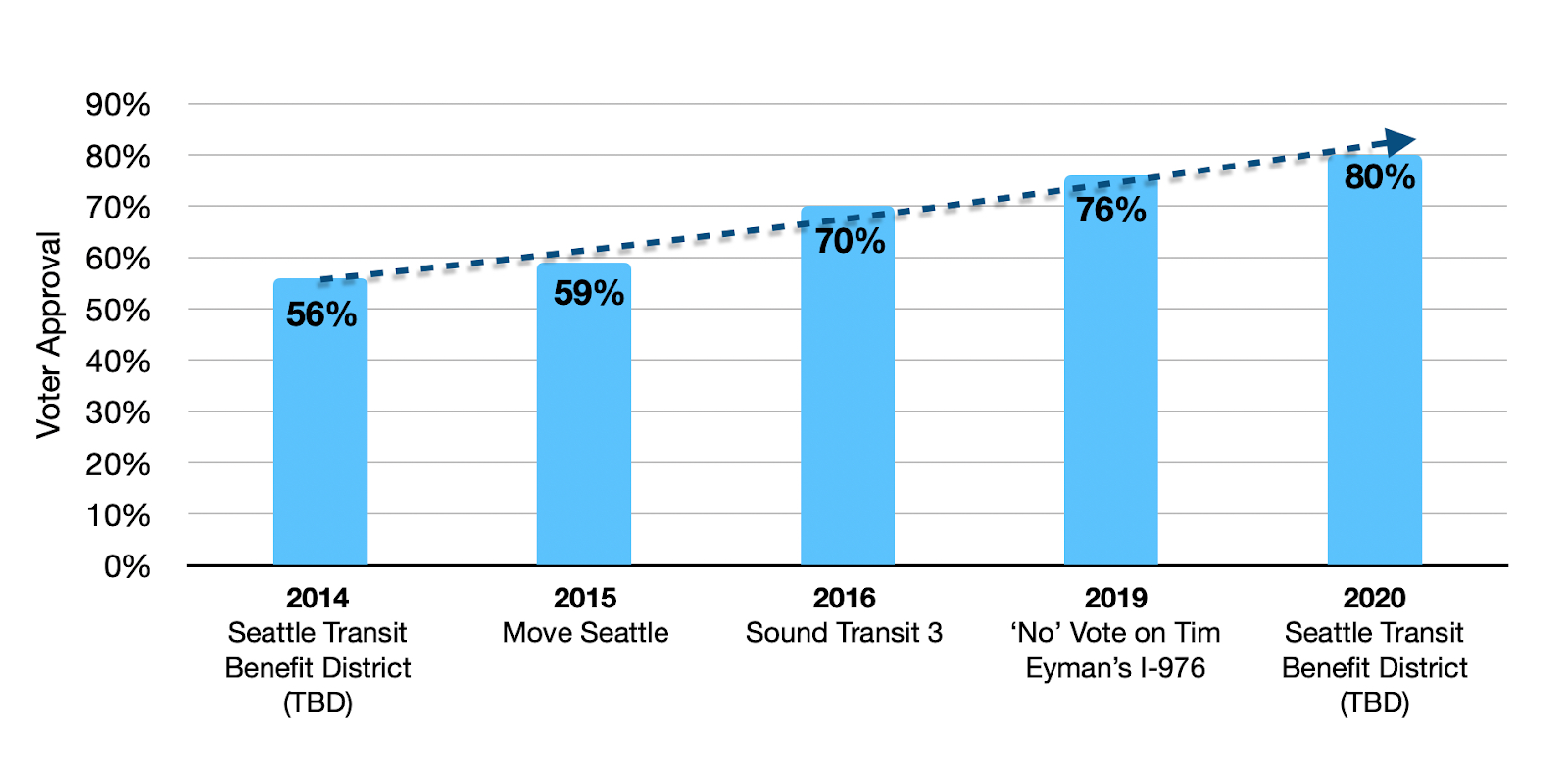
The underlying reasons to build transit in Seattle haven’t changed. Seattleites still want fast, reliable, convenient, low-carbon ways to get around the city. Voters have repeatedly reaffirmed their desire to make progress on transit — including November’s vote that passed by over 60 points in the middle of a pandemic. Seattleites believe in a post- pandemic future, and we need to make sure Sound Transit delivers the progress they demand.
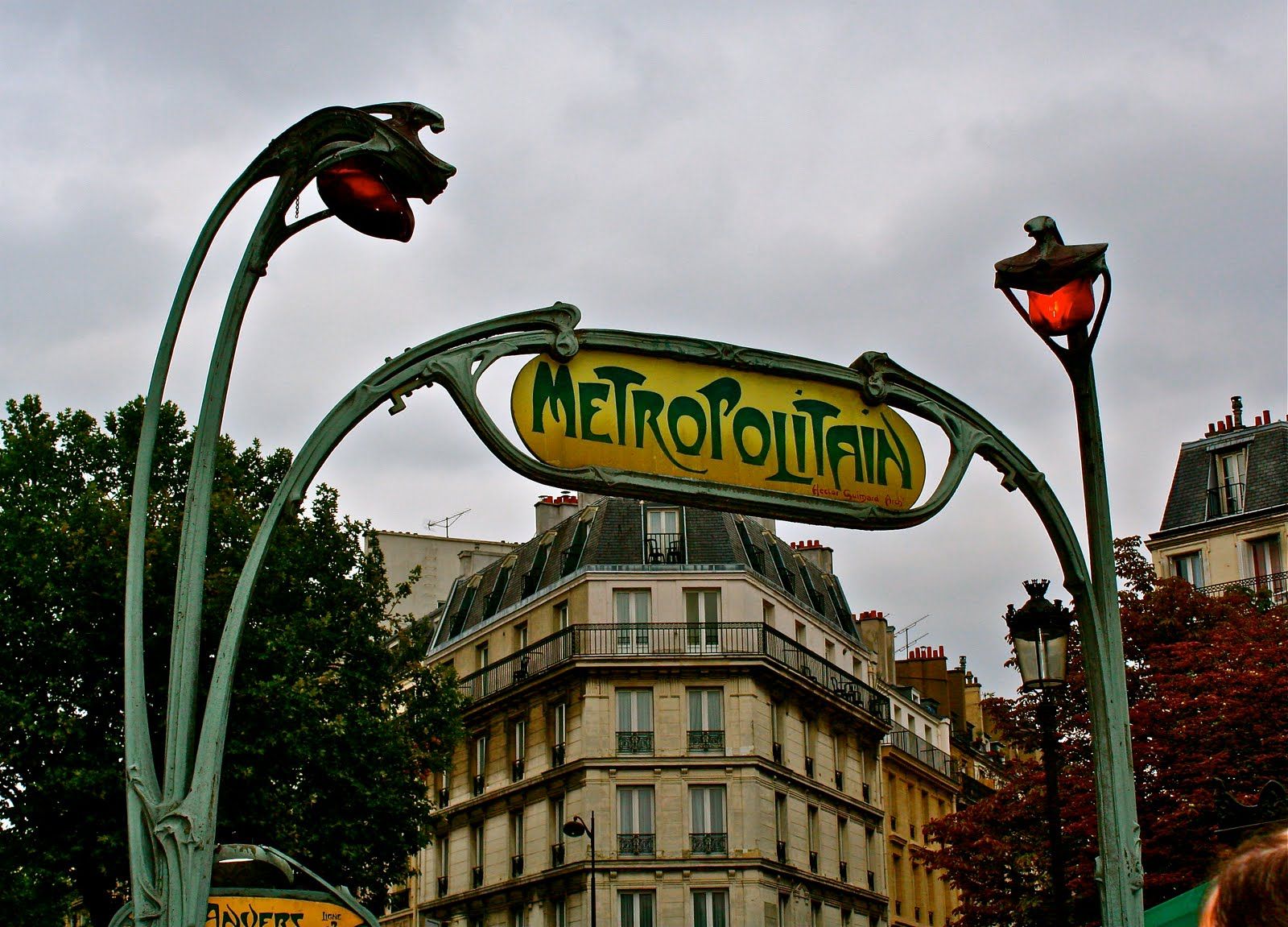
Paris, the City of Lights…and Transit and Urban Form! (Credit: Alissa Smith, Hope College)
As a result of the COVID-19 pandemic, questions about whether transit will thrive post-pandemic have been floating around. In our long term view, the human tendency to gather and the need for urban mobility has not gone away. While the pandemic has paused life for a while, and Zoom has made working from afar possible, none of that has changed human nature, or radically affected the tools we need to combat climate change.
Our species still requires connection. If history is any indicator, post-pandemic we will still have social events, shop in urban villages, and cluster where other people are. We will do these things because we are hardwired to value them. Not only does human nature point to this need for cities, climate science demands we double down on them. Don’t just take my word for it—let’s dive into a city doing it right.
The (thankfully) ex-First Lady likes to say “Be Best.” On transportation, we just say “Be Paris.”
Like many transit agencies, Sound Transit predicts a constrained financial future and has cut transit service. Under Sound Transit’s initial 2021 Service Plan, Link would have continued its current operational pattern of 8 minute peak frequencies—stepping down to 15 minute and 30 minute frequencies—through 2021. In that document, the agency blames reduced peak hour demand for this proposal. Sound Transit has since backed away from this plan after collecting feedback. Nevertheless, a sole focus on reduced demand ignores the other consequences of infrequent service on Link. These consequences are not abstract; they are quantifiable. Ignoring them significantly and disproportionately reduces the value of the Link in Seattle. We should expect more effort to analyze the consequences of these reductions in much greater detail.
While ridership-based measurements, like Sound Transit’s citation of peak hour demand, are pervasive, they are quite limited. They are subject to errors and bias from sampling. More concerning, they tightly couple observed demand for transit with actual desire for transit. In doing so, they assert that demand for a transit route is a consequence of the area the route serves. They fail to consider that the underlying quality of transit service also drives use. Ridership-based measurements are logical to use when adding service: a crowded bus is a clear sign that more capacity is warranted. When used in reverse, they create cycles where low ridership drives a reduction in frequencies, making transit less practical and dissuading potential riders further. In reality, adoption of transit depends on both the needs of people served by transit and the qualities of the transit network that serves them. Unfortunately Sound Transit’s explanation of its service reductions only guesses at the future of the former while saying nothing of the latter.
A 30′ Gillig Phantom seen on route 331 in 2009, photo by the author
On Friday Metro celebrated the retirement of the last diesel bus—part of the fleet dubbed “the 1100s”. Metro’s fleet is now comprised only of diesel-electric hybrids, battery-powered buses, and electric trolleys. To celebrate, a “Gold Tire” retirement ceremony was held to recognize the last bus, which will be preserved by the Metro Employee Historic Vehicle Association (MEHVA) which you might be able to ride some day.
The ceremony comes several months after the last trip operated by an 1100 series bus, which last saw service in late March 2020, when route 200 was suspended. The first of the 1100s entered service in 1999. A more recent addition–the D40LF or “3600s” made by New Flyer, were added to the fleet in 2003 and last saw service in April 2020.
SDOT’s plan for replacing 4,800 cars per hour that used the West Seattle Bridge at peak includes 950 more people per hour using waterborne transit. Once Covid has receded to the point that most people are returning to work, how feasible is this?
The draft SDOT framework requires “options to increase capacity for waterborne transit.” The regular West Seattle Water Taxi boat (Doc Maynard) holds 270 passengers. It generally takes 35-40 minutes to do a round trip, meaning the best case capacity is about 400 people per hour in one direction.
Last Friday, the Seattle City Council Transportation committee met and passed an initial round of amendments to a proposed Transportation Benefits District (TBD) on to full council. The last amendment, to increase the funding from 0.1% to 0.2% sales tax, was proposed by CM Tammy Morales and eventually withdrawn so that council could have more time to consider and get feedback from their constituents.
Though we agree with the concerns voiced in council that adding a regressive sales tax is not ideal, the proposed plan would cut TBD service funding by 75%: a far more regressive outcome. This funding is needed to maintain bus service that an increasing number of Seattlites will depend on just as we try to recover from a recession that is hitting people with lower incomes the hardest.
This change means replacing the $60 Vehicle Licensing Fee (VLF) from 2014’s TBD with a 0.1% sales tax, which will still represent a tax cut for households with lower incomes who own a car. A household would have to spend $60,000, not including rent or groceries, to match the VLF for one car. For lower income households that already fully rely on transit, cutting service could be devastating.
Full council is meeting next Monday, 7/27, to finalize the package that will appear on the ballot. Please join us in letting the City Council and The Mayor know that you support the full .2% TBD and emergency funding for transit next year using this quick form.
The most progressive change we can make to the proposed Seattle Transportation Benefit District (TBD) is to make it larger. Even if we focus on funding transit service as we urged last week, the initial proposal of a .1% sales tax with nothing to replace the current $60 Vehicle Licensing Fee will mean big transit cuts. Those cuts won’t be academic, they will mean cutting critical service just when many Seattleites will need it the most.
After I-976 passed last year it took away the city’s ability to include a Vehicle Licensing Fee as part of the new TBD. This would mean about a 50% cut to the TBD funding in normal times, but in the post Covid-19 recession, the cuts are much bigger. Sales tax receipts have fallen off a cliff and the recovery could be slow. We should be looking to use all the funding available in the TBD, the full .2% sales tax, so that we can return service after as the recession wanes – but we should also be looking for emergency funding for next year.
Though sales tax is a regressive funding source, it’s far better than cutting the transit people will increasingly rely on. This recession is hitting people who were already struggling to afford Seattle the hardest. About 19% of Seattle households don’t own a car and that number will almost certainly rise – cars are expensive. Inaction means forcing people on a tight budget to buy a car or continue to maintain a car because transit doesn’t serve their needs.
Metro should also be looking to structure service to match the demand that exists rather than demand that used to exist. Focus funding on supporting people trying to get to jobs that don’t conform to 9-5 schedules downtown. Transit needs to be flexible and support people’s individual economic recoveries.
We have to think about this in post Covid-19 terms. This is a ballot measure for November with funding that won’t start until April of 2021. As the pandemic fades and more people have to rely on transit, demand will go up sharply. Our transit agencies will need to be responsive and meet that demand where it is – and have the funding to back it up.
We should also be looking to improve transit funding for the future. The legislature has the power to enact progressive options for future transit funding packages. A future TBD should be at the King County level and use a progressive funding source. That work needs to start now so that we’re not having this same conversation again in a few years.
There is a Seattle City Council meeting on the proposed Transit Benefit District this morning at 10 am. Please join us in urging the council to be bold and save our transit by:
Increasing funding as much as possible (both .2% sales tax and emergency 2021 funding);
Focusing funding on Transit Service; and
Structure transit service to better serve the needs of people who are transit dependent