Lander Overpass Gets Full Funding, Needs Improvement

View of Sounder train from existing Lander St crossing
Today’s pedestrian view at the Lander crossing. Photo by Peter Lewis.

For many years, SDOT has sought to build an overpass separating cars, trucks, and buses on Lander Street in Sodo from crossing train traffic.  Last time we checked in, the project was included in the Move Seattle project list and had secured a $45 million federal grant, but was still $40 million short of full funding.  On Wednesday, the city announced that it achieved full funding, thanks to a combination of a $17 million lower cost estimate after final design, additional appropriations from the City Council, and an additional $10 million contribution from the Port of Seattle.  Construction is expected to begin next year, for completion in 2019.

The project has been controversial among local urbanists, because it is expensive and intended primarily for vehicular traffic, especially Port of Seattle truck traffic.  I think the concept of the overpass has more merit than is often acknowledged, because it would improve bus reliability and has the potential to make walking to transit safer.

The benefits to bus reliability already look promising.  Lander is the primary transit-accessible route between the West Seattle Bridge and Sodo destinations.  Today, it serves one major frequent bus route (5/21), one infrequent local route (50), and a few commuter routes.  Anecdotal evidence suggests that train crossings at Lander are responsible for a substantial portion of overall delays on routes 5 and 21, especially northbound route 5 service.  In its long-range plan, Metro expects to expand service on Lander further, upgrading the frequent Sodo-West Seattle route to RapidRide (while changing its routing) and adding a pair of routes that would provide frequent service to South Park and Tukwila.  A Lander overpass would improve reliability of all of these services substantially.

Continue reading “Lander Overpass Gets Full Funding, Needs Improvement”

New Labor Agreement Allows Part-time Drivers to Work Weekends

A RapidRide at Bellevue Transit Center Image: Oran Viriyincy

The Amalgamated Transit Union (ATU) Local 587 approved a three-year labor contract which includes a nine percent raise over three years and allows part-time drivers to work weekend shifts, King County Metro Transit announced Tuesday.

The current contract prohibits part-time drivers from working weekends and past 8:30 pm during the week. According to Metro, this change will make weekend service more cost-efficient and prevent the cancellation of bus service when a driver is unavailable. Under the new agreement, part-time workers will also be allowed to work later into the night.

“Greater use of part-time operators is a significant change. This will allow for more service and will help Metro recruit the operators it needs to increase service now and into the future,” wrote Scott Gutierrez, Metro spokesperson in an email.

Sixty-five percent of roughly 4,100 union members approved the deal, according to Gutierrez.

The contract includes an estimated $85 million in wage and benefit increases, with salary increases retroactive to Nov. 1, 2016. A three percent and four percent raise in subsequent years will follow.

The deal further guarantees drivers rest periods by inserting specific language into the contract and moves longer breaks “to more meaningful times in operators’ shifts, such as middle of the day instead of within the first or last hour.”

Continue reading “New Labor Agreement Allows Part-time Drivers to Work Weekends”

News Roundup: Legally Binding

Under-Construction Gridiron Condominiums, Pioneer Square, Seattle WA

This is an open thread

Amtrak Cascades to Add SEA-PDX Service by the End of the Year

Amtrak-Cascades-Locomotive
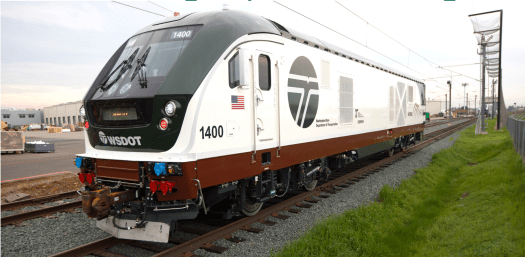
New Cascades locomotives (WSDOT)

Amtrak Cascades, the Northwest’s intercity passenger rail service, will add two new trips between Seattle and Portland by year’s end, a spokesperson for WSDOT confirmed yesterday. WSDOT officials first unveiled the new timetable (PDF) at a rail advocacy picnic in Lacey on Saturday.

The new trips are being added thanks to $800M in federal stimulus funds, which targeted 20 separate projects along the Vancouver-Seattle-Portland corridor, including congestion improvement, expanded stations, and new Siemens Charger locomotives.   Just two projects remain: the Point Defiance Bypass and the Tacoma Trestle, in coordination with Sound Transit. Sound Transit expects the trestle project – which will accommodate another three Sounder trips – to finish “before the end of 2017,” the agency said via email.

WSDOT expects travel times to decrease by 10 minutes per trip, along with much increased reliability. BNSF, which operates the corridor, will be financially incentivized to ensure 88% or better on-time performance.  On-time performance has previously been in the 75% range, with some years better than others. Last winter’s performance suffered from a series of mudslides just North of Portland.

Cascades On Time Performance

The new trains are being scheduled with a running time of 3 hours and 20 minutes, and will depart Seattle at 6:00am and 7:45pm and from Portland at 6:20am and 5:40pm. Factoring in the final 7:25pm departure from PDX, it will be possible to day trip from one city to another and spend 9+ hours in town before heading back. We at STB will continue to light a candle for a 3-hour Seattle-Portland express train.

You can read our full interview with the WSDOT rail team last year to learn more about WSDOT’s plans for the corridor and the efforts to improve the system’s ridership, farebox recovery, and on-time performance.

Link Boardings Exceed All Other ST Services Combined

photo by SounderBruce / flickr

Link Light Rail continues to knock down milestones rapidly as ridership grows.

  • January-March was the first quarter in which Link had more boardings than all Washington State Ferries combined. However, WSF outpaced Link for the second quarter (April-June) with 6,470,781 boardings to Link’s 5,997,005 for the same period.
  • May was the first month in which Link had over 2 million boardings. Matt managed to bury the lead on that one.
  • In June, Link had more boardings than the rest of Sound Transit services combined, for the first time ever, 2,113,450 to 2,070,377. Given the smaller area from which Link draws, this is a testament to the power of frequent, legible, congestion-free transit.

If Link were its own transit agency, it would have been the fifth-highest ridership agency in the state before UW Station and Capitol Hill Station opened. Now, it is well on its way to becoming the second-highest ridership agency in the state, if counted separately from the rest of ST.

Link has had a clear supermajority of weekend ST boardings since those stations opened. On weekdays, it has also moved well ahead of ST Express on boardings, but has a ways to go before becoming ST’s weekday majority ridership carrier. For June, ST Express had 65,719 average weekday boardings (a slight decrease from 2016). Link had 76,954 average weekday boardings, up a whopping 18.5% since 2016, well beyond whatever bump Angle Lake Station has provided. ST average weekday boardings in June were 163,053.

Cascade Pushing for More Bikeshare, Faster

Flickr/SounderBruce

Early numbers for the two private bikeshare companies in Seattle are promising, or at least better than the numbers that Pronto used to get. The stationless aspect certainly adds a new level of convenience for the travel, and the pricing is attractive.

SDOT’s policy allows each company’s bike fleet to double in size each month, up to 2,000 in September. But by then, summer will be winding down and we won’t see the full potential of these systems until the following year.

Cascade Bicycle Club is encouraging people to take action, and ask SDOT to change the rule to allow faster deployment. Have a look and say your piece!

Private Transit: Q&A with Mark Hallenbeck

Lyft Shuttle routes in San Francisco Credit: Lyft

Across the country, as bus routes are increasingly overcrowded and delays have slowed commuters, private transit companies are providing another choice. Mark Hallenbeck, director of the Washington State Transportation Center, sees a market for private transit but says these companies will not replace the need public transit fulfills. Answers edited for length and clarity.

STB: How will private transit, such as Lyft Shuttle and Chariot, impact public transit?

MH: Modestly. Look at Microsoft, they’ve been running one (shuttle service) for years. They carry a lot of people, yet have you seen a reduction in transit to Microsoft? No, the 545 is wall-to-wall people.  

It doesn’t remove all the other transit needs. Chariot is basically a vanpool system. We have the biggest vanpool system in the country here and it’s cheaper to let Metro give you a van than to have Chariot run it for you. Vanpools work when you have enough people going from here to there, and starting at the same time. Maybe Lyft Shuttle and Chariot will hit that margin a little bit; “good for them,” will be my attitude. “Hooray, you can make a market out of it.” Great, is it going to make the E Line empty? No. It’s not even going to come close to replacing the need (for public transportation).

STB: How are they going to get a foothold in the market? Will they take just over the most profitable routes?

MH: They will take some of the people off of the profitable routes, but the profitable routes are still going to be full. Their goal is to make money. So if you’re trying to make money, you don’t really care that there’s a public service. If that public service is low-end, is there a market for people willing to pay for high-end services? That’s the bet that Lyft (and Chariot) are trying to make.

Look at housing costs: there are people who will happily pay money for a better experience. The downside of vanpools is, it’s a mediocre ride; the downside of the E-Line, D-Line or C-Line is, it’s a mediocre ride. Wouldn’t you like to be in a nice bus with good wi-fi and comfy seats? And maybe a reserved seat so you don’t have to stand in line in the rain in January? If you have the money, why not?

If you have the density — and Seattle is becoming more, more dense — these services start to potentially pencil [make economic sense]. But they’re only going to pencil in very specific markets; those markets are massive transit markets, which means 90 percent of you aren’t going to qualify very well for those Lyft (Shuttle) or Chariot trips.

They are only going to come once an hour, once a half-hour. The E-Line is going to come by every 3 minutes once we give them their own lane. So you’re going to decide, do I want to be on the schedule and get a comfy seat? Or do I want to just leave, and I don’t care about standing up, the bus is going to be here in three minutes?

Continue reading “Private Transit: Q&A with Mark Hallenbeck”

Plan B for Mercer Island

Mercer Island Park and Ride: Bay 1 from Bay 2

Now that Mercer Island and Sound Transit have reached a settlement, the temperature on this dispute has gone down. Dan reported the key aspects:

  • $4.5m-worth of new park-and-ride spaces (up to 200), plus 100 temporary spaces while South Bellevue is closed;
  • an essentially status-quo level and pattern of bus traffic, aside from city-only buses;
  • About $5m for congestion and safety projects, at the city’s discretion, and a Metro “last-mile” pilot project.

The new spaces will help, a little, but the fundamental issue remains. Even with the coming Link station, many residents rightfully despair of having a decent traffic-free alternative for getting off the island. There are several reasons for this predicament:

  1. An undersized park and ride (thanks to actions of previous Mercer Island governments, partially mitigated by the settlement).
  2. The appeal of this P&R to eastside commuters.
  3. Inadequate bus service from elsewhere on the Eastside, which encourages people to driving to Mercer Island instead. The settlement actually intensifies this problem.
  4. A road grid not suited to rapid feeder bus service
  5. The expiration of previous special express lane privileges. It would appear the agreement closes this issue, much to the relief of many disgusted outsiders.

Taken together, beyond a select set of early risers, the options to escape gridlock seem to be shrinking, not growing. While Mercer Island’s wealth shouldn’t exclude it from the same dynamics as everyone else, when combining it with the Link station there are opportunities to make the situation a lot better.

Continue reading “Plan B for Mercer Island”

Everett Transit Pushes Back Broadway Project

An example bus bulb (Everett Transit)

Everett Transit has been preparing for a major face-lift for one of the city’s main transit corridors, North Broadway, between Downtown Everett and the Everett Community College campus. Originally slated for this year, the project has been pushed back into 2018 while additional design work is completed.

The North Broadway project will add 24 bus bulbs on Broadway between 41st Street and Tower Street, allowing buses to stop in-street, as well as new shelters and garbage cans at the bus stops themselves. Most of the North Broadway corridor is used by Everett Transit route 7, with a handful of stops shared with Community Transit routes 201 and 202 and inter-city express service from Skagit Transit and Island Transit. Two major stops, at 34th Street near Everett Station and at Tower Street near Everett Community College, will be moved to nearby intersections that have signaled crosswalks to reduce potential vehicle-pedestrian collisions (though it is still legal to cross at an unmarked crosswalk).

During construction in the spring and summer of next year, Everett Transit says to expect some delays for buses during daytime hours, as well as marked stop relocations and closures. The project should be completed by late 2018.